Playlist Pitching Best Practices for Independent Artists

Pitch one unreleased song through Spotify for Artists at least 7 days before release, name 2–3 tracks already on your target playlist to prove sonic fit, and back it with a short promo plan. That’s the core of every successful playlist pitching campaign strategy. Here’s exactly how to execute it:
- Pick your strongest song. Choose the track that most honestly matches the target playlist’s mood, energy, and genre, not the one you love most.
- Submit early. Log into Spotify for Artists → Music → Upcoming. Submitting your pitch several weeks before release gives editors real time to consider your track. Seven days is the minimum for Release Radar eligibility.
- Prove playlist fit. Name 2–3 songs already on the playlist and describe the overlap in production style, tempo, or emotional tone.
- Write a tight promo plan. Two to three sentences: pre-save campaign, social posting schedule, and any press or playlist adds you’ve already secured.
- Complete your profile. Bio, photos, Canvas, and Artist Pick should all be current before you hit submit.
- Run parallel outreach. Use Groover or BandLab Sounds to reach independent curators at the same time as your editorial submission.
- Deliver audio and metadata on time. ISRC, explicit flag, composer credits, and distributor delivery must all be locked before you pitch.
Table of Contents
- What are the exact timelines and eligibility rules for Spotify pitching?
- How do you fill out the Spotify for Artists pitch form correctly?
- What should you actually include in your pitch?
- How do you choose the right song and prepare your audio?
- When should you pitch independent curators, and how?
- How do you track results and what do you do after you pitch?
- What mistakes get pitches ignored?
- Key Takeaways
- The part most artists get wrong about playlist pitching
- Upncomer puts your entire release workflow in one place
- Useful sources
- FAQ
What are the exact timelines and eligibility rules for Spotify pitching?
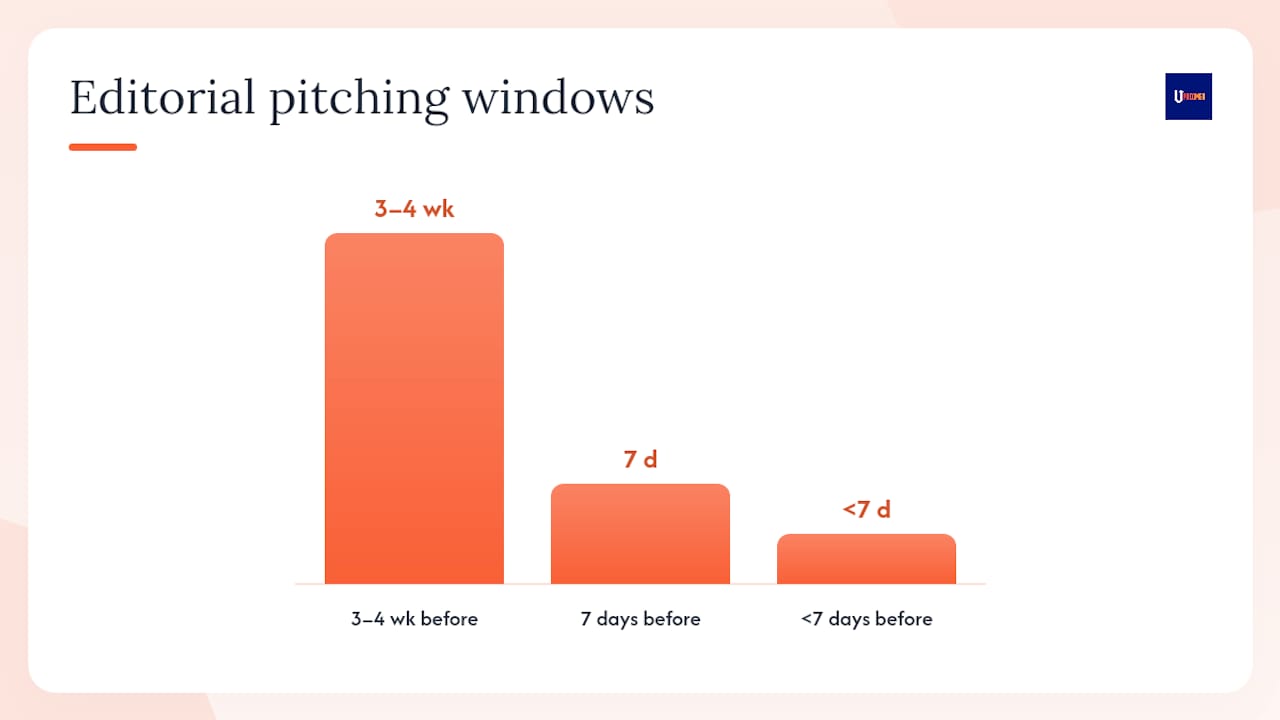
Spotify’s official pitching rules are clear: you must submit at least 7 days before your release date to be eligible for editorial consideration, including Release Radar. Spotify recommends pitching several weeks in advance, giving human editors enough runway to evaluate your track before their playlist update cycles close.
Only unreleased tracks qualify for editorial pitching. Once a song is live, that window is gone. You can pitch one song per release, so if you’re dropping an EP, choose the track with the strongest playlist fit before you submit.
| Submission Window | Eligibility Outcome |
|---|---|
| 3–4 weeks before release | Recommended; gives editors maximum consideration time |
| 7 days before release | Minimum eligible; Release Radar still possible |
| Under 7 days before release | Ineligible for editorial; Release Radar not guaranteed |
| After release | No editorial consideration; algorithmic only |
Video pitching follows a separate process with its own eligibility windows depending on how your video is delivered through your distributor. Check your distributor’s delivery specs before assuming video and audio pitches run on the same schedule.
Access matters too. Only users with Admin or Editor roles in Spotify for Artists can submit a pitch. If you work with a manager or label, confirm who holds those roles before release week, because a missing permission is a surprisingly common reason pitches never get submitted.
How do you fill out the Spotify for Artists pitch form correctly?
The pitch form lives at Artists → Music → Upcoming inside Spotify for Artists. You’ll only see it for tracks that are delivered but not yet released. Here’s how to work through it field by field:
- Fill in instrumentation and culture fields — These are often skipped and shouldn’t be. Instrumentation helps editors match your track to themed playlists. Culture context (regional sound, language, scene) can open doors to location-specific editorial lists.
- Write your 500-character pitch text. This is the field that matters most. Use it for context, fit, and your promo plan, not your biography.
Sample pitch (under 500 characters):
You can edit the pitch form up to release day, but editors may not see changes made in the final 48 hours. Submit your best version early and resist the urge to keep tweaking.
What should you actually include in your pitch?
Spotify’s playlisting guidance breaks it down simply: pick your song, tell your story, and explain why it fits. In practice, curators read three things first.
1. Placement suggestion. Tell the editor where on the playlist your track belongs. “This would sit well after Track 6 on ‘Mood Booster’” is more useful than “I think this fits your playlist.” Specificity signals that you’ve actually listened.
2. A short creative hook. One or two sentences on what makes this track different. Not “this song is about heartbreak” but “this is a 3 AM song for people who can’t stop replaying a conversation.” Berklee Online’s guidance puts it plainly: emphasize what makes your music and story unique, and give curators the context they need to champion your track internally.
3. Promo proof. A concrete, believable plan. Pre-save numbers, a confirmed press feature, a tour date, or a social campaign with real reach all count. Vague claims like “I’ll be promoting heavily” do not.
Pro Tip: Name 2–3 specific tracks already on the target playlist and describe the sonic or mood overlap. This single habit separates pitches that get read from ones that get skipped.
Three ready-to-use pitch templates
Indie singer-songwriter (under 500 characters): Uptempo electronic single (under 500 characters): Collaborative feature (under 500 characters): Dos and don’ts at a glance:
| Do | Don’t |
|---|---|
| Name specific playlist tracks | Write generic “I love your playlist” openers |
| State concrete promo actions | Promise streams you can’t back up |
| Use accurate genre and mood tags | Stretch tags to chase a bigger playlist |
| Keep it under 500 characters | Paste your full bio into the pitch field |
| Include a release date | Leave timing vague |
How do you choose the right song and prepare your audio?
The track you pitch should be the one that fits the target playlist most honestly, not the one you worked hardest on. Curators can tell when an artist is forcing a genre label that doesn’t match the music, and a mismatch is an instant pass.
Selection criteria:
- Does the intro hook within the first 30 seconds? Curators preview tracks fast.
- Is the track length in range for the playlist? Most editorial playlists favor 2:30–4:00 minutes.
- Does the energy match the playlist’s flow, not just its genre tag?
- Is the save-to-stream ratio likely to be strong? A track listeners skip hurts your algorithmic reach.
Audio and metadata checklist before you submit:
- Master to Spotify’s preferred loudness target (around -14 LUFS integrated, -1 dBTP true peak)
- Deliver in WAV or FLAC at 44.1 kHz / 16-bit minimum through your distributor
- Artwork at 3000x3000 pixels minimum, RGB color, no text or logos that violate Spotify’s guidelines
- ISRC assigned and confirmed with your distributor
- Explicit content flag set accurately
- Composer and performer credits complete
- Release date locked and matching your distributor’s delivery schedule
Check your music release checklist before delivery. A metadata error caught after submission can delay your release and kill your pitch window.
When should you pitch independent curators, and how?
Editorial pitching and independent curator outreach aren’t competing strategies. They run in parallel, and the combination gives your release far more surface area than either alone.
The difference matters. Spotify’s editorial team consists of human editors who build official playlists like “Mood Booster” or “Fresh Finds.” Independent curators run their own playlists, often with highly engaged niche audiences. Paid pitch platforms like Groover and BandLab Sounds sit in between: they connect you with independent curators who have agreed to listen and respond, often with written feedback.
What Groover and BandLab Sounds actually offer:
- Guaranteed feedback from curators within a set window (Groover’s model)
- Access to curators across genres and regions who aren’t reachable through cold email
- Transparent credit-based pricing with no pay-for-placement guarantees
That last point is the red flag to watch for. Any service promising guaranteed playlist placement in exchange for payment is a violation of Spotify’s terms and a signal that the placements won’t drive real listeners.
For direct curator outreach, keep it short:
Follow-up etiquette:
- Wait at least 7–10 days before following up on a cold pitch
- One follow-up only; a second message after no response is the ceiling
- If they say no, thank them and ask if there’s a better fit in a future release
Building a genuine relationship with even five or six curators who trust your taste pays off across multiple releases. That’s a long game worth playing. For more on managing outreach at scale, the artist press and media outreach guide covers tracking and follow-up workflows in detail.
How do you track results and what do you do after you pitch?
Results from editorial pitches show up in Spotify for Artists under Music → Playlists. If your track gets added, you’ll see the playlist name, the date it was added, and listener data tied to that placement. If it doesn’t appear, that’s your answer too.
Metrics worth watching in the first two weeks post-release:
| Metric | Why It Matters |
|---|---|
| Saves per stream | High save rate signals strong listener intent; feeds Discover Weekly |
| Completion rate | Tracks listeners finish get recommended more often |
| Repeat listens | A strong indicator of superfan behavior and algorithmic favorability |
| Playlist adds (user-generated) | Shows organic traction beyond editorial |
| Follower growth rate | Measures whether the release is converting listeners to fans |
Algorithmic playlists like Discover Weekly and Release Radar depend heavily on these engagement signals. A track with a high save rate and strong completion rate will keep getting recommended long after the editorial window closes, which is why optimizing for listener behavior matters as much as landing the initial placement.
If your track wasn’t picked up editorially, shift your energy to post-release promotion. Targeted social posts, email list alerts, and pre-save campaign follow-ups all drive the engagement signals that feed the algorithm. Spotify’s Campaign Kit includes free tools alongside paid options like Marquee and Showcase. Playlist pitching itself is free; the paid Campaign Kit tools work best as amplifiers once you have real listener data to target.
For independent curators, post-release is actually a good time to reach out. You now have streaming data, a live track link, and real listener behavior to reference, which makes your pitch more credible than a pre-release cold email.
What mistakes get pitches ignored?
Most rejected pitches fail for the same handful of reasons. Run this self-audit before you submit.
Common mistakes:
- Late submission. Under 7 days before release means no editorial consideration, period.
- Wrong genre selection. Picking “Hip-Hop” for a track that’s clearly pop-rap to chase a bigger playlist is obvious to editors and hurts your credibility.
- No reference tracks. A pitch that doesn’t name specific songs on the target playlist reads as a mass submission.
- Generic pitch text. “This song will resonate with your audience” tells an editor nothing. Specificity is the whole job.
- Incomplete metadata. Missing ISRC, wrong explicit flag, or mismatched release dates can disqualify a submission before an editor reads a word.
- Unrealistic promo claims. Promising “millions of streams” with no evidence is a red flag, not a selling point.
Red flags curators log:
- Mass-submission language (“I’m reaching out to several playlists…”)
- Poor audio quality or a track that sounds unfinished
- A sparse or inactive Spotify profile
- No promotional plan or one that’s clearly copy-pasted
Quick self-audit checklist:
- [ ] Submitted at least 7 days before release (3–4 weeks preferred)
- [ ] Named 2–3 specific tracks on the target playlist
- [ ] Pitch text is under 500 characters and specific
- [ ] Genre and mood tags are accurate, not aspirational
- [ ] Audio is mastered and metadata is complete
- [ ] Artist profile is current (bio, photos, Canvas, Artist Pick)
- [ ] Promo plan is concrete and believable
Key Takeaways
Successful playlist pitching combines early submission, honest genre tagging, named playlist references, and a credible promo plan, repeated consistently across every release.
| Point | Details |
|---|---|
| Submit 3–4 weeks early | Spotify’s minimum is 7 days, but 3–4 weeks gives editors real consideration time. |
| Name reference tracks | Cite 2–3 songs already on the target playlist to prove you’ve listened and your track fits. |
| Keep pitch text under 500 characters | Use the field for fit, story, and promo proof, not your biography. |
| Complete all metadata | ISRC, explicit flag, credits, and artwork must be locked before you pitch. |
| Track saves and completion rate | These signals feed Discover Weekly and Release Radar long after editorial windows close. |
| Upncomer for release workflows | Upncomer’s Growth Engine, Amplitude AI, and Distribution modules support pitching, delivery scheduling, and campaign measurement in one place. |
The part most artists get wrong about playlist pitching
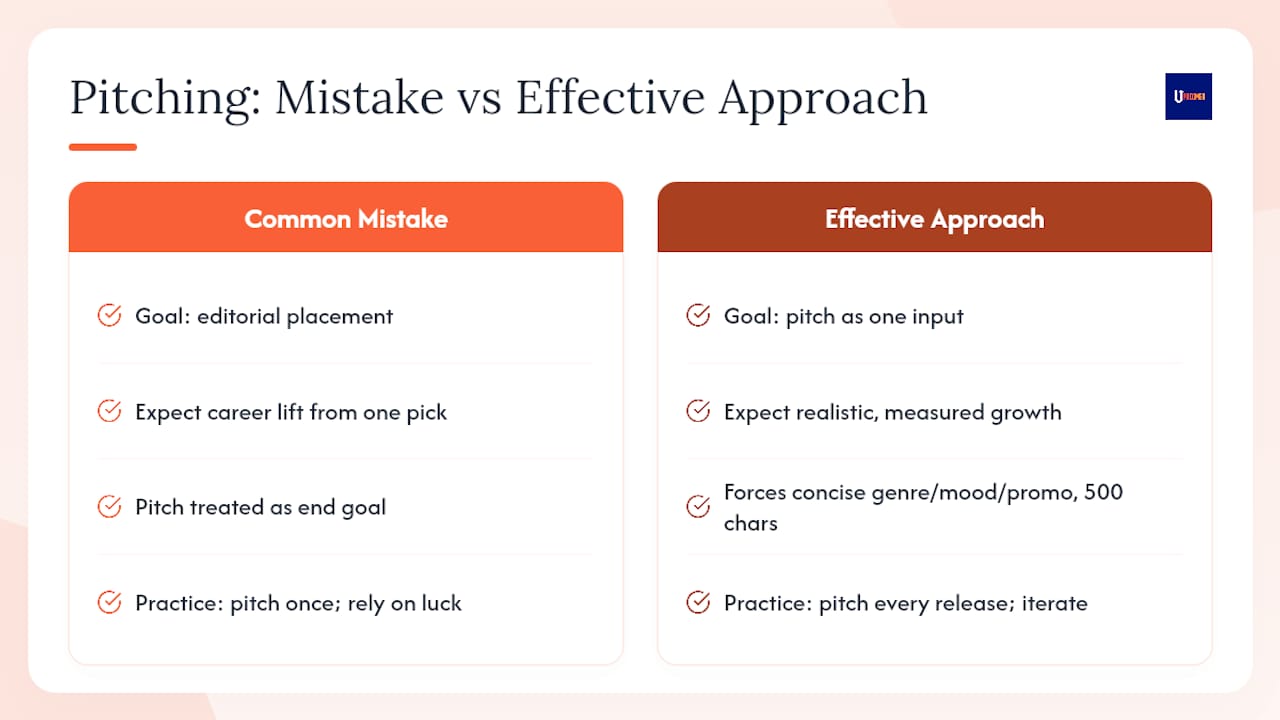
There’s a version of playlist pitching advice that treats editorial placement as the goal. Get on “Fresh Finds,” get on “Mood Booster,” and your career takes off. That framing is understandable, but it sets most independent artists up for frustration.
Acceptance rates for independent artists without an established presence are extremely low. That’s not a reason to stop pitching. It’s a reason to pitch with the right expectations and to build a strategy that doesn’t depend on editorial placement to succeed.
What actually works is treating the editorial pitch as one input in a broader release system. The pitch forces you to articulate your genre, your mood, your promo plan, and your playlist fit in 500 characters. That discipline makes every other part of your release better: your social posts get sharper, your curator emails get more specific, your metadata gets cleaner.
The artists who see consistent growth from pitching aren’t the ones who land the big editorial placement once. They’re the ones who pitch every release, iterate on their pitch language using what they learn from rejections and placements, and build genuine relationships with five or ten independent curators over time. Release Radar and Discover Weekly do a lot of heavy lifting when your save rate is strong, and that’s a result of good music paired with a credible promo plan, not a lucky editorial pick.
Pitch early, pitch honestly, and measure everything. The data from each release tells you what to do differently on the next one.
Upncomer puts your entire release workflow in one place
Managing a playlist pitching campaign strategy across Spotify for Artists, independent curator outreach, social scheduling, and streaming analytics is a lot to coordinate manually. Upncomer brings all of it into one platform built specifically for independent artists.
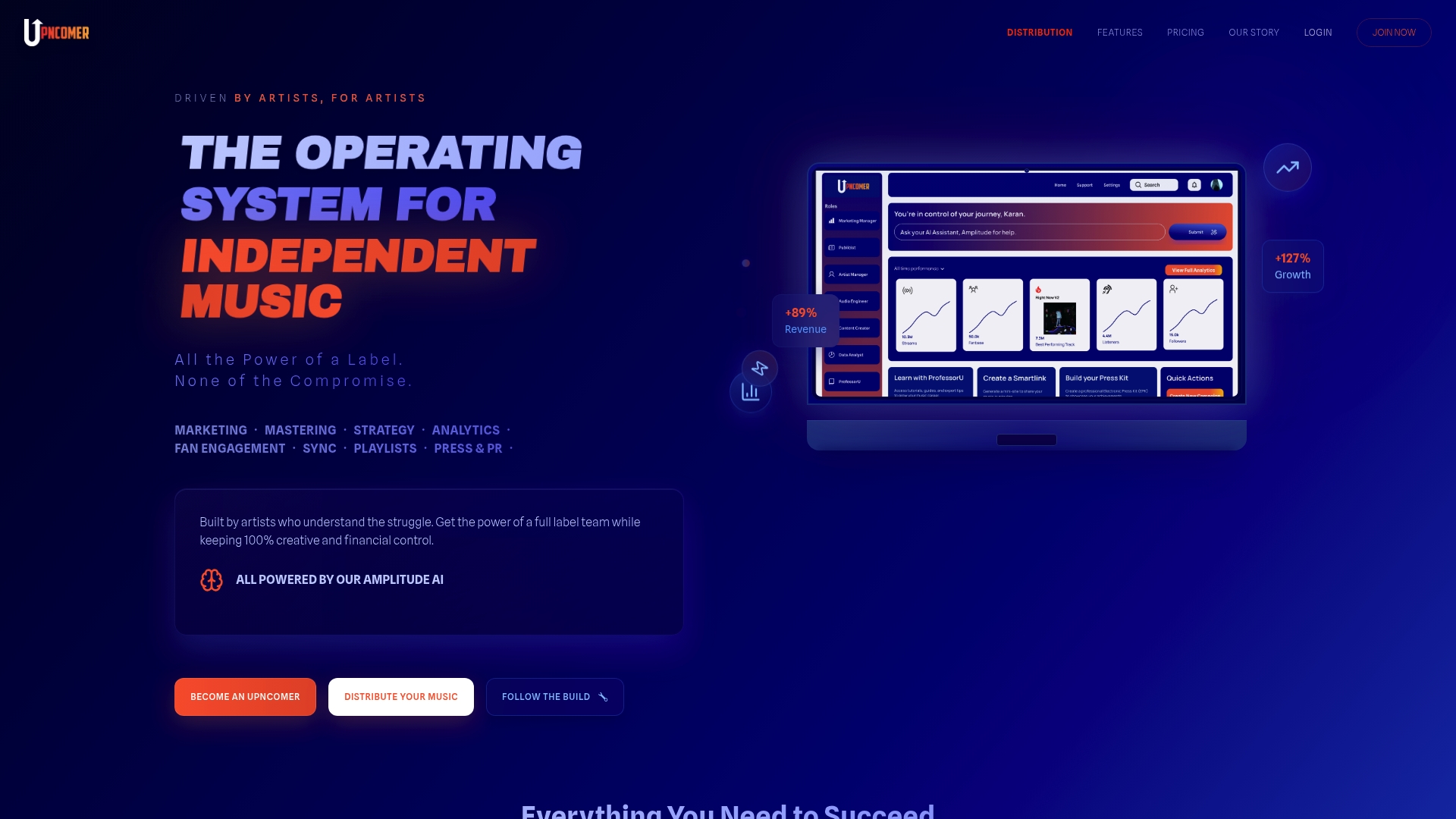
The Growth Engine handles campaign planning and ad management so your promo plan has real reach behind it. Amplitude AI gives you data-driven guidance on release timing, pitch language, and audience targeting. Artist Manager keeps your release checklist and curator outreach organized. Content Creator helps you build the social assets your pitch references, and Distribution handles delivery so your metadata and audio arrive on time, every time.
Instead of stitching together five different tools before every release, you run the whole workflow from one dashboard. Your pitch gets stronger because your promo plan is real, your profile is current, and your metrics are tracked from day one.
See what Upncomer can do for your next release at upncomer.co, or check the community updates for the latest platform features supporting pitching and release campaigns.
Useful sources
These are the primary references worth bookmarking for playlist pitching and release planning:
- Pitching music and videos to Spotify playlist editors
- How to Get Your Music on Spotify Playlists — Berklee Online
- Spotify Playlist Pitching Strategy: The Complete 2026 Guide | Tools 4 Music Blog | Tools 4 Music 2026
- How to pitch Spotify editorial playlists: A step-by-step guide for independent artists | DIY Musician
- Best Practices: Pitching in Spotify for Artists - Flypaper - Soundfly
- Spotify Campaign Kit: How Artists Can Use Spotify’s Promotion Tools
- Making the most of your artist profile on Spotify
FAQ
How early should you submit a Spotify editorial pitch?
Submit at least 7 days before your release date, but 3–4 weeks is what Spotify recommends for real editorial consideration. Under 7 days and you’re ineligible for Release Radar.
Can you pitch a song that’s already been released?
No. Spotify’s editorial pitching is only available for unreleased tracks. Once a song goes live, the editorial window closes and only algorithmic playlists can pick it up organically.
How many songs can you pitch per release?
One song per release through Spotify for Artists. If you’re releasing an EP or album, choose the track with the strongest playlist fit before you submit.
What’s the difference between Groover and Spotify editorial pitching?
Spotify editorial pitching targets Spotify’s human editors who curate official playlists, and it’s free. Groover connects you with independent curators who guarantee feedback in exchange for credits, reaching niche audiences outside the editorial system.
Does Upncomer help with playlist pitching workflows?
Yes. Upncomer’s platform includes tools for distribution scheduling, campaign management, streaming analytics, and curator outreach tracking, covering the full release workflow that supports a successful pitch.