Music Project Management: A Practical Guide for Artists
Music project management is the repeatable system that converts a creative idea into a delivered release, tour, or campaign. If you’ve ever missed a drop date, lost a stem file, or watched a rollout fall apart because nobody owned the metadata, you already know what bad project management costs you.
Here’s what to do right now, in 30 minutes or less:
- Clarify scope: Write one sentence defining what this project produces (e.g., “A two-track single with a music video, released on all major platforms”).
- Pick a hard deadline: Work backwards from your release date. No date, no plan.
- Create one task list: Open a doc, a board, or a notes app and list every task you can think of. You’ll organize it later.
Success looks like: delivered on time, artistic intent intact, and budget not blown. Berklee Online’s project management course defines this as a repeatable process for planning, executing, and monitoring work that turns creative vision into achievable goals. Two industry standards anchor every project: ISRC codes (required for distribution) and release metadata. UpNComer’s platform is built to manage both alongside your full campaign.
Key Takeaways
Effective music project management comes down to three things: a clear scope, named owners for every task, and a release timeline built backwards from the drop date with contingency baked in.
| Point | Details |
|---|---|
| Start with scope and deadline | Write a one-sentence project definition and lock a release date before any other work begins. |
| Use the 4-phase framework | Vision, Plan, Execution, and Delivery give every project a repeatable structure from idea to release. |
| Build in revision buffers | Treat every deadline as an educated guess and add 5–7 days of contingency before your distributor upload. |
| Own your metadata | Verify ISRC, UPC, featuring credits, and publisher splits before upload, not after, to avoid royalty delays. |
| UpNComer unifies the stack | UpNComer connects distribution, mastering, marketing, analytics, and pitching in one workspace for independent artists. |
Table of Contents
- What does a music project manager actually do?
- How to run a music project from idea to release
- Breaking your project into tasks and realistic schedules
- Which tools should you use for each part of the project?
- How to estimate budgets and build realistic timelines
- How to build a career in music project management
- Your 8-week release plan and copy-paste checklist
- The pitfalls most artists don’t see coming
- UpNComer runs the operational side so you can focus on the music
- Sources
- FAQ
What does a music project manager actually do?
The role sits between the creative and the operational. A music project manager coordinates team efforts, tracks progress, and translates creative goals into deliverable milestones, according to Berklee’s careers guidance. In practice, that means owning the schedule, the budget, the communication chain, and the delivery checklist, so the artist can focus on the music.
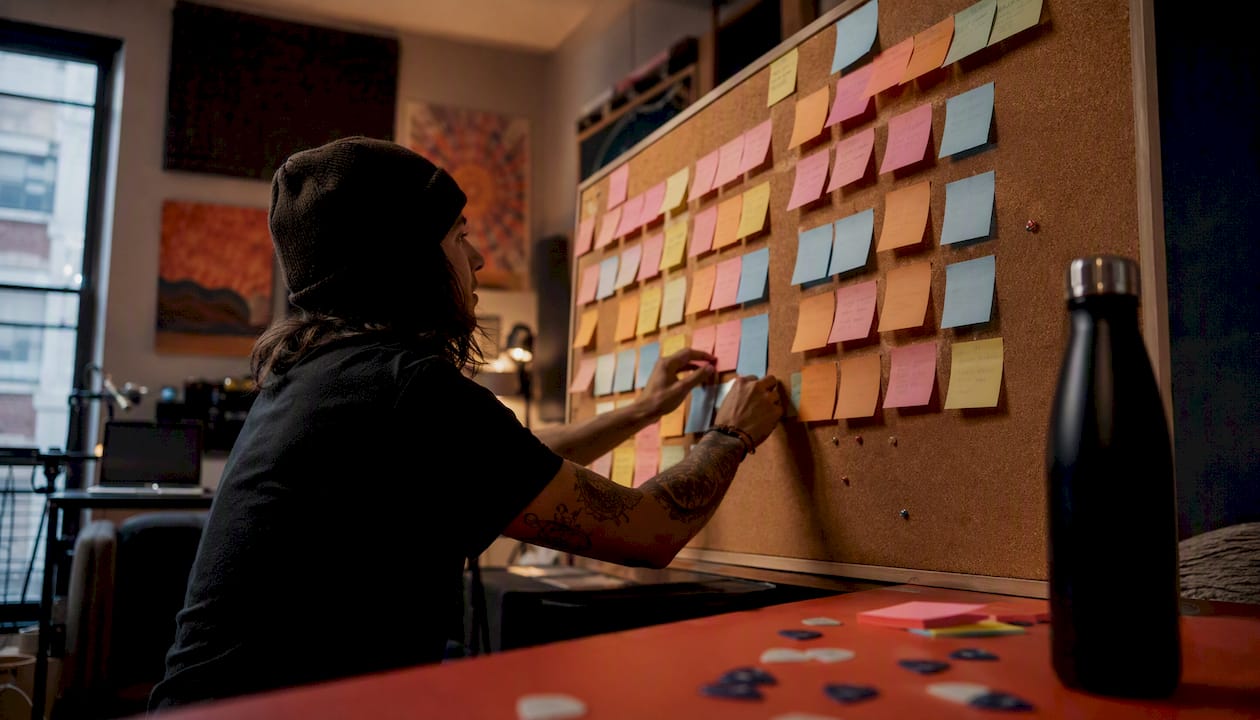
The confusion usually comes from overlap. A producer shapes the sound. An artist-as-PM often tries to do everything and burns out. A dedicated project manager holds the container so neither of those people has to.
Here’s how the role shifts depending on the project type:
| Role | Primary Focus | Key Deliverables |
|---|---|---|
| Solo artist (self-managed) | Release coordination, social content, distribution | Single or EP live on DSPs, metadata complete |
| Label-style album project | Budget oversight, team coordination, PR timeline | Mastered album, press campaign, playlist pitching |
| Sync/score project | Brief compliance, file delivery, rights clearance | Stems, cue sheets, ISRC registration, client approval |
| Tour manager | Logistics, venue contracts, crew scheduling | Confirmed dates, settled shows, travel itinerary |
The cleaner you define who owns what before the project starts, the less you’ll be chasing people during execution.
How to run a music project from idea to release
Berklee’s course materials recommend blending frameworks from agile and lean with music-specific checkpoints, creating a hybrid process that fits creative work without strangling it. The four-phase structure below does exactly that.
-
Vision (Week 1–2): Define the project. What are you releasing? Who’s involved? What’s the budget ceiling? Lock the release date, confirm collaborators, and document the creative brief. Milestone: signed-off brief and confirmed team.
-
Plan (Week 2–3): Build the task list, assign owners, and map dependencies. Confirm studio time, book mixing and mastering, and set internal deadlines for each deliverable. Milestone: full project schedule with named owners.
-
Execution (Week 3–7): Record, produce, mix, master, create artwork, write metadata, register ISRCs, and build marketing assets. This phase has the most moving parts. Weekly check-ins keep it from drifting. Milestone: all assets approved and upload-ready.
-
Delivery and support (Week 7–8+): Upload to distributor, pitch to playlists, launch PR, and run paid promotion. Monitor streaming analytics and fan engagement in the first two weeks post-release. Milestone: release live, first-week data reviewed.
Phase checklist you can copy into any project tool:
- [ ] Creative brief signed off
- [ ] Release date confirmed with distributor
- [ ] ISRC codes registered
- [ ] Mixing session booked
- [ ] Mastering session booked
- [ ] Artwork delivered and approved
- [ ] Metadata complete (title, featuring credits, genre, UPC)
- [ ] Distribution upload submitted
- [ ] Playlist pitching submitted (at least 7 days pre-release)
- [ ] PR outreach sent
- [ ] Paid campaign live on release day
Breaking your project into tasks and realistic schedules
A work breakdown structure (WBS) sounds corporate, but for music it’s just a hierarchy: project → tracks → stems → mixes → approvals → metadata → upload. Start at the top and keep splitting until each item is something one person can actually do in a day or two.

For a single release, the dependency chain looks like this: final recording must finish before mixing starts; mixing must be approved before mastering; mastering must be complete before ISRC registration and distributor upload; artwork must be approved before the upload form is filled. Nothing in that chain is optional, and each step blocks the next.
A simple task-assignment template for each item:
- Owner: Who is responsible (one name, not “the team”)
- Due date: Specific day, not “end of week”
- Acceptance criteria: What “done” looks like (e.g., “mastered WAV at -14 LUFS, approved by artist”)
- File-name convention: e.g.,
ArtistName_TrackTitle_Master_v1_YYYYMMDD.wav
Pro Tip: Berklee’s scheduling guidance treats every deadline as an educated guess. Build in at least one revision round per deliverable, and add a 3–5 day buffer before your distributor upload deadline. Revision rounds are not failure; they’re the job.
Which tools should you use for each part of the project?
General-purpose task boards like Trello or Asana work fine for basic scheduling, but they don’t have fields for ISRCs, release pipelines, or stem version control. Music-native tools are emerging to fill that gap precisely because generic boards create extra manual work for music teams.
Here’s a practical breakdown by job category:
- Project and task tracking: Notion or Trello for solo artists; Asana or ClickUp for small labels. Pros: flexible, free tiers available. Con: no music-specific fields out of the box.
- File and stem management: Google Drive or Dropbox for basic storage. Music-native tools (like purpose-built studio workflow platforms) add version control and delivery checklists. Con: storage costs scale fast.
- Catalogue and metadata management: A spreadsheet works at first. As your catalogue grows, a dedicated metadata tool or your distributor’s dashboard becomes necessary. Always track UPC, ISRC, and release date in one place.
- Distribution and ISRC tracking: Your distributor (DistroKid, TuneCore, CD Baby, or similar) handles ISRC assignment. Log every code in your master catalogue sheet the day it’s issued.
- PR and playlist pitching: SubmitHub for independent pitching; UpNComer’s Publicist module for automated press and playlist outreach. Track every submission with a response deadline.
- Finance tracking: A simple spreadsheet with columns for cost bucket, vendor, amount, and payment status covers most independent projects. Add a “paid/unpaid” flag and review it weekly.
For a music release checklist that maps these tools to each milestone, UpNComer’s blog has a ready-to-use version built for independent artists.
Recommended starter stack for an independent artist:
- Notion (project board + metadata tracker)
- Google Drive (file storage with folder naming convention)
- Your distributor’s dashboard (ISRC + release scheduling)
- UpNComer (marketing, analytics, pitching, and distribution in one place)
How to estimate budgets and build realistic timelines
Every music project has the same core cost buckets. Who owns each one depends on your deal structure.
Common cost buckets:
- Recording: Studio time or home studio costs (artist or label)
- Mixing: Mixing engineer fee (artist or label, sometimes producer)
- Mastering: Mastering engineer fee (artist or label)
- Artwork: Designer fee or stock license (artist or label)
- Distribution: Flat fee or royalty split (artist)
- Promotion: Paid ads, PR, playlist pitching fees (artist or manager)
- Touring logistics: Venue deposits, travel, crew (artist, tour manager, or label)
Build your timeline by working backwards from the release date. If you’re releasing on a Friday (the industry standard in the U.S.), count back: distributor upload needs to happen at least 7 days prior for most platforms, often 14 days for editorial playlist consideration. Mastering needs to be done before upload. Mixing before mastering. And so on.
Single release (4-week minimum):
| Week | Milestone | Owner |
|---|---|---|
| Week 1 | Final mix approved | Mixing engineer + artist |
| Week 2 | Master delivered, ISRC registered | Mastering engineer + PM |
| Week 2–3 | Artwork approved, metadata complete | Designer + PM |
| Week 3 | Distributor upload submitted | PM or artist |
| Week 4 | Release live, PR and ads launch | Artist + manager |
EP release (6–8 weeks minimum): Add one week per additional track for mixing and mastering, and two extra weeks for coordinated PR across multiple singles if you’re doing a pre-release campaign.
Add a contingency buffer of at least 5–7 days to every project. Delays happen: a mix revision, a collaborator going dark, a distributor processing lag. The buffer is not laziness; it’s professional planning.
How to build a career in music project management
The job titles you’ll see posted vary more than you’d expect. On Indeed, active listings include “project manager,” “production supervisor,” “release coordinator,” “A&R coordinator,” and “event manager,” all requiring overlapping PM skills. LinkedIn shows many project management music roles across the U.S. at any given time, spanning production companies, labels, music education, and live events.
Skills that get you hired:
- Schedule management and deadline tracking
- Budget oversight and vendor communication
- Metadata and rights basics (ISRC, UPC, publishing splits)
- Familiarity with DAWs (you don’t need to mix, but you need to speak the language)
- Communication across creative and business stakeholders
How to build your portfolio without a label job:
- Coordinate a release for a local artist and document the timeline, budget, and outcome
- Volunteer as a production assistant for a local event or festival
- Take Berklee Online’s project management course and list it on your resume
- Use UpNComer’s Artist Manager and Distribution modules to run a real release and screenshot the workflow as a case study
For broader music career management guidance, including how to position yourself as both an artist and a project lead, UpNComer’s blog covers the overlap in depth.
Where to find roles:
- Indeed and LinkedIn (search “music project manager,” “release coordinator,” “production manager”)
- Music industry job boards: Music Jobs, Work In Music, Sonicbids jobs section
- Networking: NARM, A3E, and local music industry meetups in major markets (LA, NYC, Nashville, Atlanta)
Your 8-week release plan and copy-paste checklist
Use this 8-week plan to take a single from final mix to release and first-week promotion. It works for most independent releases and scales up for EPs with minor adjustments.
Week-by-week timeline
Week 1: Finalize mix, get artist approval, brief the mastering engineer. Lock the release date officially.
Week 2: Mastering complete. Register ISRC. Brief the artwork designer. Start writing press bio and pitch copy.
Week 3: Artwork approved. Metadata complete (title, featuring credits, genre, mood tags, UPC). Begin social content creation.
Week 4: Upload to distributor. Submit to editorial playlist consideration (Spotify for Artists, Apple Music for Artists). Send press pitches.
Week 5: Pre-save campaign live. Social content scheduled. Paid ad creative finalized and tested.
Week 6: Influencer and playlist outreach follow-up. Pre-release content drops (behind-the-scenes, lyric snippets).
Week 7: Final pre-release push. Confirm all assets are live and links are working. Brief your team on release-day tasks.
Week 8 (Release week): Release day execution. Paid ads live. Monitor streaming analytics daily. Engage with fan comments and shares. Review first-week data and adjust.
Copy-paste checklist
[ ] Mix approved by artist
[ ] Mastering engineer briefed and booked
[ ] ISRC registered
[ ] UPC obtained from distributor
[ ] Artwork delivered (3000x3000px, RGB, 72dpi minimum)
[ ] Metadata complete and proofread
[ ] Distributor upload submitted
[ ] Spotify for Artists editorial pitch submitted
[ ] Apple Music for Artists pitch submitted
[ ] Press bio updated
[ ] Press pitches sent (blogs, playlists, radio)
[ ] Pre-save link live and shared
[ ] Social content calendar scheduled (Weeks 5–8)
[ ] Paid ad creative approved and live
[ ] Release-day team briefed
[ ] First-week analytics review scheduled
Importing into Trello: Create a board with lists named by week (Week 1, Week 2, etc.). Paste each checklist item as a card. Assign an owner and due date to each card.
Importing into Notion: Create a database with properties: Task, Owner, Due Date, Status, and Week. Paste each item as a row. Use the calendar view to see the full timeline at a glance.
UpNComer module mapping:
- Weeks 1–3 (Production): UrStudio for mastering; Distribution for ISRC and upload prep
- Weeks 3–5 (Marketing setup): Content Creator for social assets; Growth Engine for ad campaign setup
- Weeks 4–6 (Pitching): Publicist for press and playlist outreach automation
- Weeks 6–8 (Launch and monitoring): Amplitude AI for streaming analytics; Data Analyst for first-week performance review
For a longer rollout, the 12-week artist rollout plan on UpNComer’s blog extends this framework into a full quarter.
The pitfalls most artists don’t see coming
Scope creep is the quiet killer of music projects. It starts with “let’s add one more track” or “can we do a visualizer too?” and ends with a blown budget and a missed release date. The fix is a written scope document that both artist and manager sign off on before any work starts. When a new request comes in, you evaluate it against the scope, not against your instinct to say yes.
Metadata mistakes are the other one. A misspelled featuring credit or a wrong ISRC can delay royalty payments for months. The artist’s legal name, the featuring artist’s legal name, the publisher split, and the ISRC all need to be verified before the distributor upload, not after. Build a metadata review step into every project plan as a non-negotiable gate.
What I do differently: I treat the metadata check and the scope document as the two most important artifacts in any project, more important than the creative brief. The creative brief can evolve. The metadata and the scope are the contracts that protect everyone.
UpNComer’s integrated workspace is one of the few platforms that connects the operational side (distribution, metadata, ISRC tracking) with the marketing side (campaigns, analytics, fan engagement) in a single environment, which is exactly what you need when you’re running a project without a full label team behind you.
UpNComer runs the operational side so you can focus on the music
Managing a release across five disconnected tools is where projects fall apart. UpNComer brings distribution, marketing, analytics, and fan engagement into one workspace built specifically for independent artists and music teams.
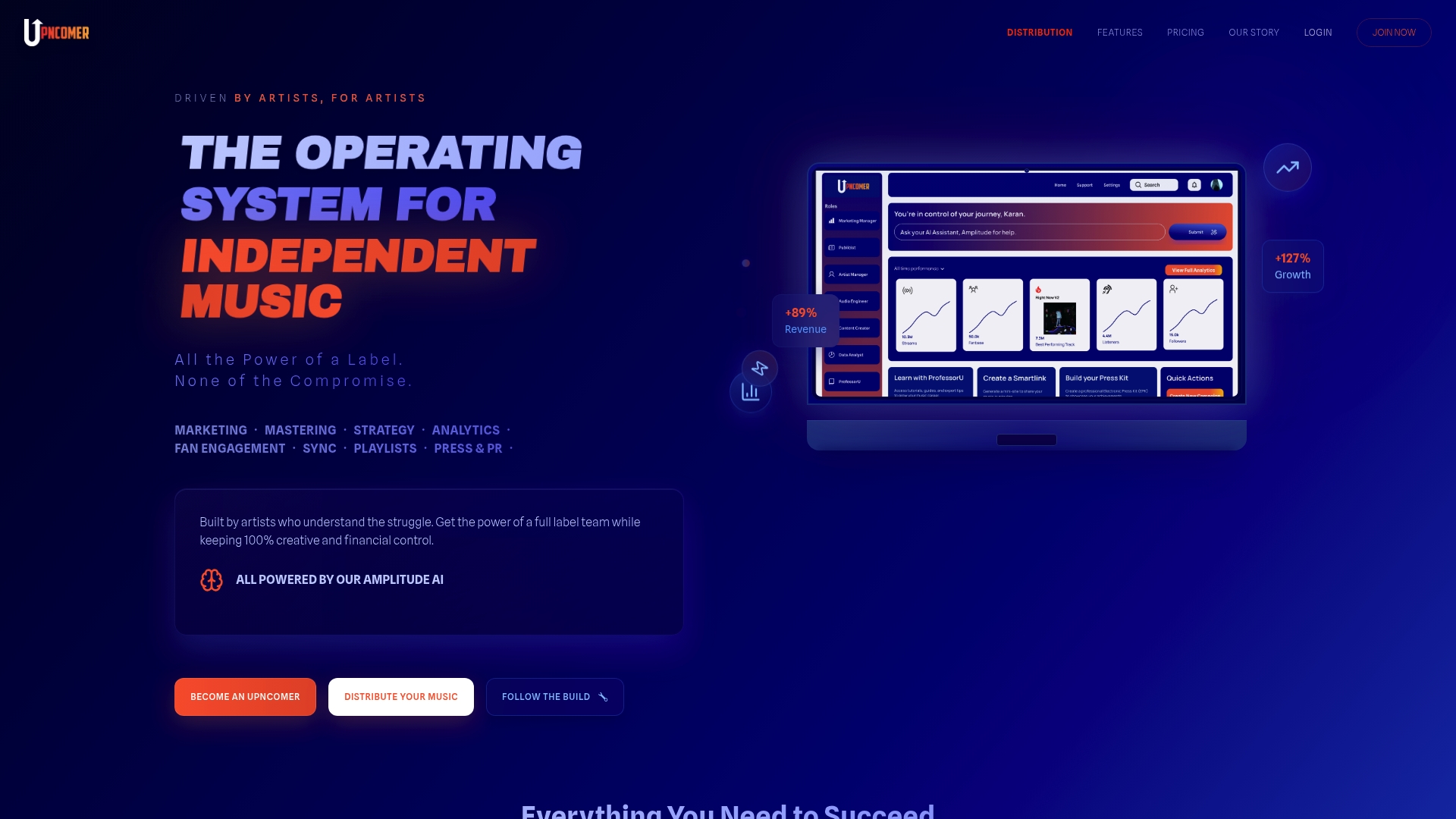
Here’s how UpNComer maps to the 4-phase workflow: during planning, Amplitude AI helps you analyze audience data to choose the right release timing and target markets. During execution, UrStudio handles mastering and Content Creator builds your social assets. During the launch phase, Growth Engine runs your ad campaigns and Publicist automates press and playlist pitching. Post-release, Data Analyst tracks streaming performance and fan engagement so you know what’s working.
No agency retainer. No duct-taped stack of tools. Just one platform that handles the full artist campaign management cycle from first upload to first-week analytics. Check out UpNComer’s full feature set and start running your next release the way a label team would, without needing one.

Sources
- Project Management for Musicians - Berklee Online
- Music Management Project Manager Jobs, Employment
- 1000+ Project Management Music jobs in United States
Use UpNComer’s ProfessorU learning module for ongoing education on release strategy, marketing funnels, and artist development. Follow UpNComer’s content for updated templates and workflow guides as the industry evolves.
FAQ
What does a music project manager do?
A music project manager coordinates team efforts, tracks progress against deadlines, manages budgets, and translates creative goals into deliverable milestones, covering everything from studio scheduling to distributor uploads and PR campaigns.
What are the 5 C’s of project management?
Definitions vary across frameworks, but a common version used in creative industries covers: Clarity (defined scope), Commitment (named owners), Communication (regular check-ins), Control (progress tracking), and Closure (post-release review). No single universal standard defines these for music specifically.
Where can I find music project management jobs in the U.S.?
Indeed and LinkedIn are the most active boards, with titles ranging from “release coordinator” to “production supervisor.” Networking through industry organizations like A3E and attending music conferences in Nashville, LA, or NYC also surfaces roles before they’re posted publicly.
Do music project managers need formal training?
Formal training helps but isn’t required to start. Berklee Online’s project management course is the most recognized U.S. credential in this niche. Building a portfolio by coordinating real releases, even small ones, carries as much weight as a certificate with most independent labels and management companies.