8 Week AI Release Strategy for Independent Artists, Ready to Run
An AI release strategy is an end-to-end campaign system where artificial intelligence handles the repetitive layers of planning, targeting, creative production, distribution, and measurement, so you focus on the music. Start today: build a fan segment inside your data tools and open a 12-week release checklist. This system works because it removes guesswork, not artistry.
TL;DR:
- AI tools can streamline the planning and targeting phases by automating campaign calendars and predicting the most promising fan segments before spending on ads.
- Creative tasks such as mastering, captioning, and short-form video production are well-suited for AI, allowing artists to generate content quickly and efficiently.
- Automation of distribution handles metadata, rights, and delivery, but artists must verify details and disclose AI use where required by platform policies.
- Monitoring early campaign signals within the first two weeks helps artists reallocate ad spend and optimize creative elements before budgets run out.
- Regular market analysis with AI enables artists to spot emerging trends and competitor movements, informing timely strategic decisions.
Table of Contents
- What Does an AI Release Strategy Actually Include?
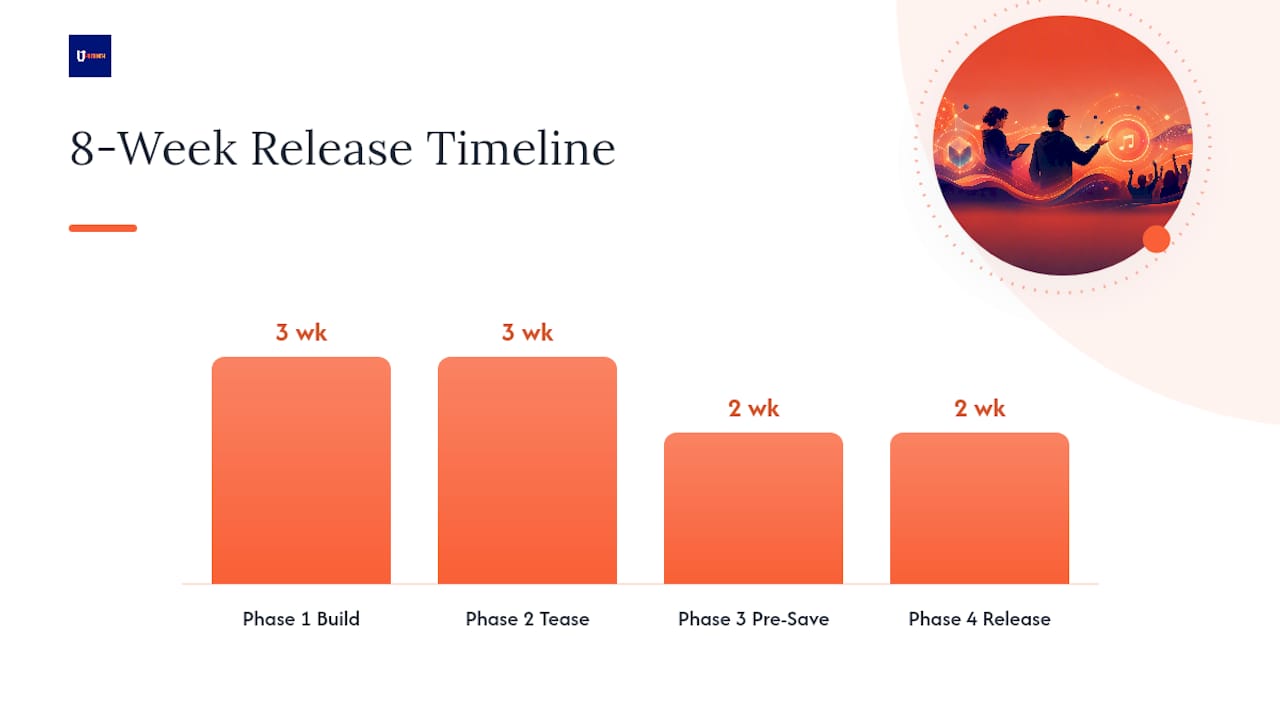
- What Does an 8-Week AI Release Timeline Look Like?
- How Do You Use Predictive Analytics to Target the Right Playlists and Ads?
- Which Creative Tasks Should You Hand Off to AI?
- How Do You Automate Distribution and Protect Your Rights?
- What Should You Do on Release Day and the Two Weeks After?
- How Can AI Help You Track Competitors and Market Trends?
- Using AI to Scale Without Losing What Makes You, You
- How UpNComer Fits Every Piece of This Plan
- Sources
- FAQ
What Does an AI Release Strategy Actually Include?
A working AI release strategy has five moving parts, and each one gets measurably easier when AI does the heavy lifting.
- Planning: AI turns a rough release date into a full campaign calendar, mapping tasks backward from launch day.
- Audience: Predictive tools flag which fans, markets, and playlists are worth your time before you spend a dollar on ads.
- Creative: AI mastering and asset generation multiply one song into dozens of usable pieces of content.
- Distribution: Automated metadata tagging and delivery scheduling cut down on the manual errors that delay a release.
- Measurement: Real-time analytics tell you within days, not months, whether a tactic is working.
Independent artists who build a repeatable system around these five pieces consistently outperform peers running ad hoc campaigns, largely because structure reduces decision fatigue. When you’re not reinventing your workflow for every single, you make faster, better calls. Automating the boring parts, like tagging metadata or drafting caption variations, frees up energy for the parts only you can do: writing, performing, and connecting with fans.
What Does an 8-Week AI Release Timeline Look Like?
Copy this. Adjust the weeks if you need a 10 or 12 week runway, but keep the phases in order.
Phase 1: Build (Weeks 8–6)
- Lock the final master and confirm distribution metadata (ISRCs, splits, credits).
- Draft artwork and video assets using AI creative tools, then run a human tonal pass.
- Import your fan list into a segmentation tool and tag superfans versus casual listeners.
Phase 2: Tease & Monetize (Weeks 5–3) 4. Launch a smart link with a pre-save offer. 5. Open a tiered pre-release offer (early access, bundle, membership tier) to fund the rest of the campaign. 6. Build ad audiences from your top-performing segments and start playlist pitching.
Phase 3: Pre-Save Sprint (Weeks 2–1) 7. Send email sequences to each fan segment with distinct messaging. 8. Finalize ad creative variants and schedule posts across platforms. 9. Confirm distributor delivery windows and check storefront previews.
Phase 4: Release & Follow-Up (Day 0–14) 10. Activate every smart link and push release-day emails and posts. 11. Monitor early KPIs daily and reallocate ad spend toward what converts. 12. Follow up with playlist curators and log results for your next cycle.
Before you move from one phase to the next, run a quick readiness check: master approved, metadata clean, at least one monetized offer live, and ad audiences built from real data rather than guesses. If any of those are missing, hold the phase instead of pushing forward on a shaky foundation.
How Do You Use Predictive Analytics to Target the Right Playlists and Ads?
Predictive analytics work by feeding your past release data, streams, saves, skip rates, playlist adds, into a model that forecasts where your next release is likely to land. Artists using this approach get a real record-label-level advantage simply by knowing where to aim before they spend money.
The workflow breaks into three steps:
- Run behavioral segmentation on your existing fan base to find lookalike audiences worth targeting with ads.
- Build a prioritized playlist seed list based on curators who have placed similar songs before, rather than pitching blind.
- Convert your highest-intent segments (people who’ve streamed multiple songs or saved a smart link) into your first ad audience.
The market backs this up. The global recorded music market is projected to reach $33.6 billion by 2026, and a growing share of musicians already rely on AI tools somewhere in that pipeline. You are not early to this. You’re catching up if you’re not doing it yet.
Pro Tip: Test a small ad budget, something you won’t miss, against your predicted audience for 3 to 5 days, then reallocate the rest of your spend toward whatever segment actually converts. Short cycles beat long guesses.
Which Creative Tasks Should You Hand Off to AI?
Mastering, caption drafting, and short-form video editing are the three tasks that eat the most artist hours for the least creative reward, and they are exactly what AI tools handle well.
AI mastering platforms analyze your track and suggest a mastering chain, often producing near-professional results in minutes instead of days. Still, run an A/B comparison between the AI master and a trusted human pass on two systems, studio monitors and a phone speaker, before you commit. AI writing and design tools like ChatGPT and Canva can generate a full slate of captions, emails, and visuals ahead of launch, which you then edit into your own voice rather than posting raw.
From one master, you can realistically pull:
- 3 hook clips for short-form platforms
- 5 social video edits in vertical format
- 2 lyric videos for streaming and archive posting
Draft with AI, humanize with your own ear, finalize with a second listen the next day.
How Do You Automate Distribution and Protect Your Rights?
Distribution automation handles the paperwork side of a release, metadata accuracy, ISRC assignment, split sheets, and delivery windows, so nothing gets held up by a typo or a missed deadline.
- Confirm every metadata field before submission; a wrong ISRC or misspelled credit can delay a release by days.
- Use royalty tracking tools to reconcile payouts automatically instead of cross-checking spreadsheets by hand.
- Keep manual review on splits and rights ownership; automation speeds up delivery but shouldn’t make ownership decisions for you.
- Disclose AI use where a platform or collaborator requires it, and check the terms of any AI tool before feeding it your masters or metadata, since some platforms train on submitted content.
What Should You Do on Release Day and the Two Weeks After?
Release day itself is operational, not creative. Activate smart links, confirm storefront publishing went through, push your emails, run final ad boosts, and follow up on any pending playlist pitches.
Then watch these signals for the first 14 days:
- First-day stream count and playlist adds.
- Save rate and click-through rate on your smart links.
- Retention by fan cohort, are new listeners coming back for a second stream?
If a signal underperforms, act fast. Reallocate ad spend toward whatever audience is converting, and refresh any creative variant that’s flat by day 3 to 7. Waiting past day 7 to adjust usually means you’ve already spent the budget that would have fixed it.
How Can AI Help You Track Competitors and Market Trends?
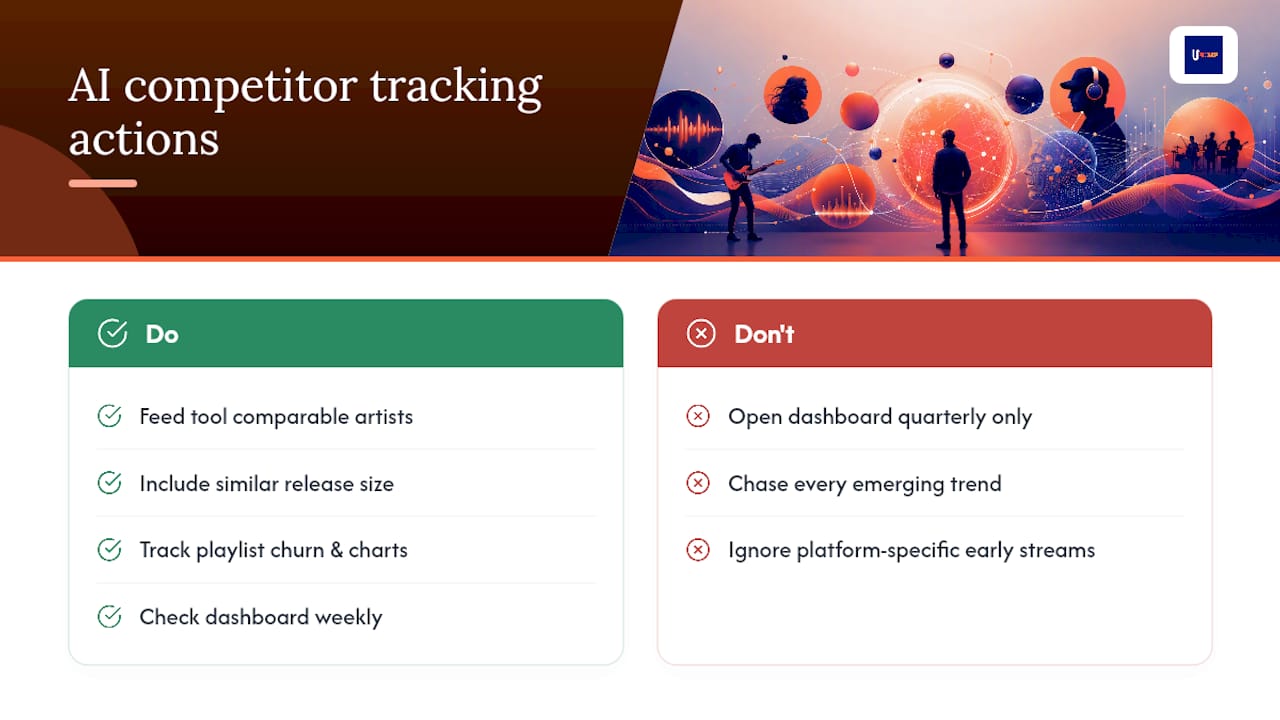
AI-driven market analysis lets independent artists do something that used to require a label’s research team: watch competitors and genre trends in near real time. Tools that track streaming charts, playlist churn, and social engagement patterns can flag when a subgenre is heating up or when an artist in your lane just landed a major placement, giving you a window to act while it’s still relevant.
Practically, this means feeding your analytics tool comparable artists, similar release size, similar genre, similar audience, and watching how their releases perform against yours. Did their pre-save numbers spike two weeks out? Did a particular platform drive most of their early streams? That’s a pattern you can test on your own release.
Trend forecasting works the same way at a genre level. AI models trained on streaming and social data can surface which sounds, tempos, or content formats are gaining traction before they peak. You don’t need to chase every trend, but knowing one exists lets you make an informed choice about whether to lean into it or stay in your own lane on purpose.
The catch: this only works if you’re checking it regularly. A competitive analysis dashboard you open once a quarter tells you what already happened. Checked weekly, it tells you what’s about to happen, which is the entire point of using AI here instead of just reading a music blog after the fact.
Using AI to Scale Without Losing What Makes You, You
AI removes the operational drag that keeps independent artists from running label-caliber campaigns, the tagging, the scheduling, the endless caption drafts. That’s a real gain. But it comes with responsibility.
Keep creative control over anything with your name on it, disclose AI use where it’s material, and never let an algorithm replace your direct relationship with fans. The artists who win long-term treat AI as infrastructure, not a substitute for judgment.
— Karan
How UpNComer Fits Every Piece of This Plan
This approach replaces the patchwork of separate tools most independent artists cobble together, mapping directly onto the five components covered above with integrated predictive analytics, audience segmentation, AI-assisted mastering, content creation, and campaign workflow management.
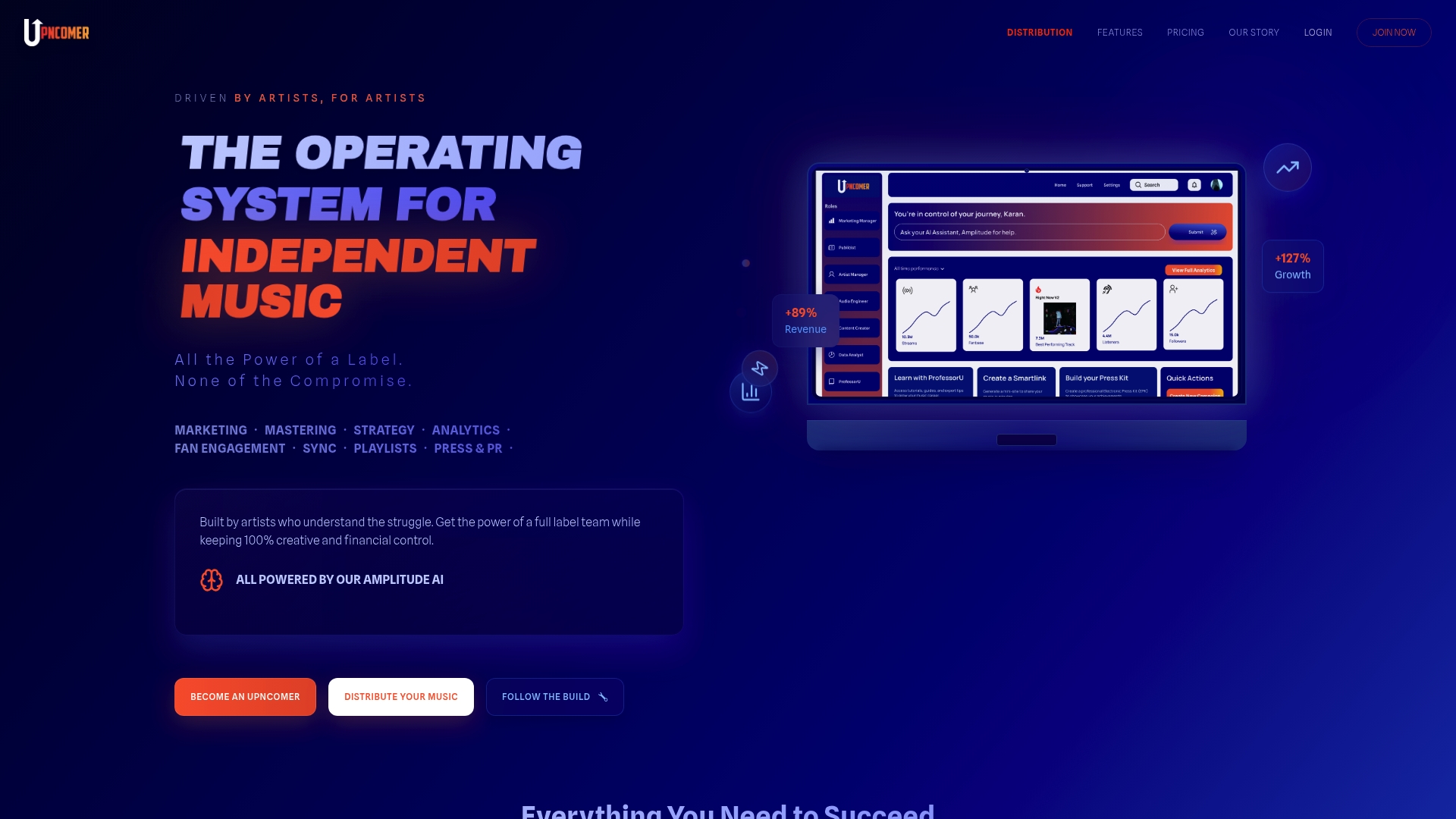
Distribution runs on a flat 6% royalty split with no subscription fee attached, and it handles metadata, delivery, and royalty tracking automatically. If you want the full toolkit, including Amplitude AI, streaming analytics, and campaign management, UpNComer Pro costs approximately $27 per month or $300 per year. Start by pulling up the music release checklist and mapping your next drop against it, then check the distribution page or pricing to see which tier fits your workflow.
Sources
For playlist pitching mechanics, see how to pitch artists to playlists. For local discovery tactics, review how artists get discovered locally. For a 30-day campaign template, check Milestone 9’s guide.
- How AI is giving independent musicians a record-label-level advantage
- The Future Is Now: AI Release Strategy and Campaign Management for Indie Artists
- Release Campaign with AI: Transform Your Strategy – Making A Scene!
FAQ
What Is an AI Release Strategy?
It’s an AI-assisted system covering planning, audience targeting, creative production, distribution, and measurement for a music release, built to reduce manual work at every stage.
How Long Should My Release Timeline Be?
Eight to twelve weeks gives enough runway for pre-release monetization, playlist pitching, and a proper pre-save sprint without losing momentum.
Can AI Really Master My Track as Well as a Human?
AI mastering tools deliver near-professional results for many tracks, but run an A/B comparison against a human master on two listening systems before you commit to either.
Do I Have to Disclose AI Use in My Music?
Disclosure requirements vary by platform and collaborator agreement, so check the specific terms where you’re distributing and always protect ownership over anything an AI tool touches.
What Does UpNComer Cost?
UpNComer Pro is $27 per month or $300 per year, and music distribution runs on a 6% royalty split with no separate subscription fee.